
Dear Students,
Nowadays every other person does yoga; it has become an integral part of daily life for many people. Is yoga limited only for asanas? My answer will be “NO.” YOGA IS A WAY OF LIFE.
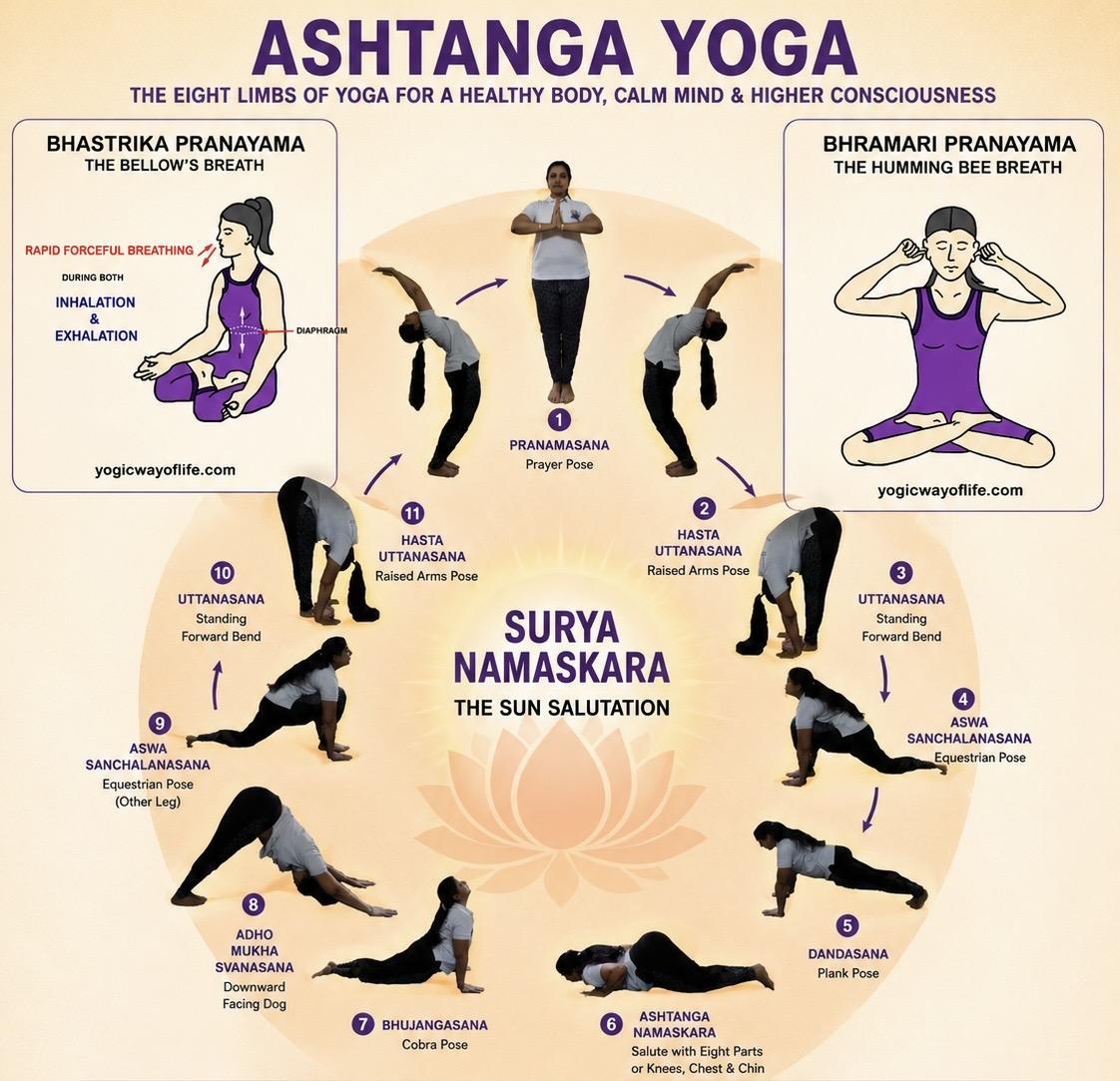
I just want to walk you through the Ashtanga yoga given by Maharishi Patanjali and tell you how every student can blossom by following these eight limbs.
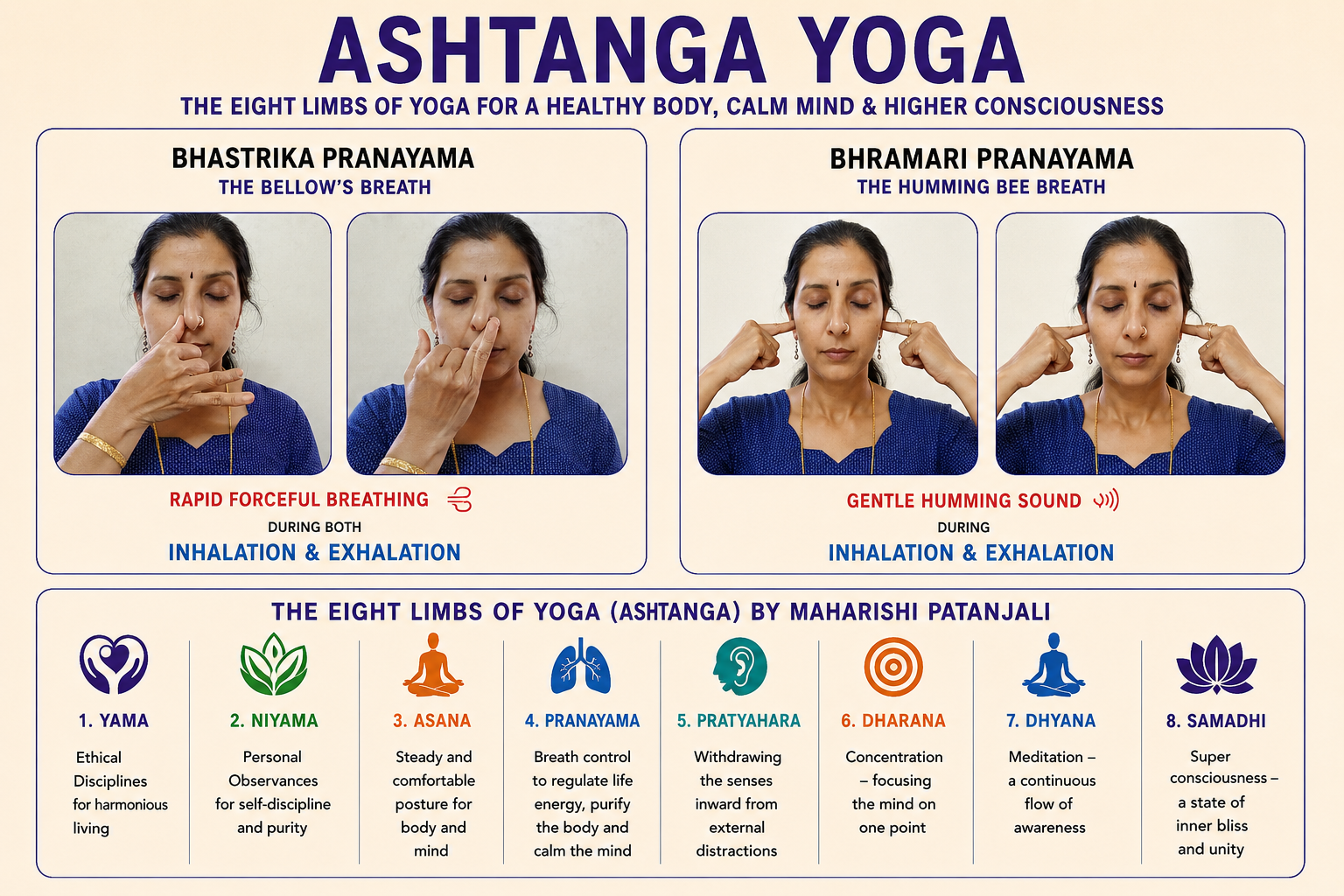
The eight limbs given by Patanjali are Yama, Niyama, Asana, Pranayam, Pratyahara, Dharana, Dhyana, and Samadhi. Let’s see each one and see what it says.
1. YAMA – Ahimsa, Sathya, Astheya, Brahmacharya and Aparigraha
AHIMSA– Non-violence; you should not harm yourself or others, not only physically but also through words and actions.
SATHYA—Always speak the truth.
ASTHEYA—non-stealing: This includes not taking things, words, thoughts, ideas, or resources that belong to others.
BRAHMACHARYA—maintaining celibacy or focusing on conserving energy from sensory distractions.
APARIGRAHA—Non-attachment to material things and mental/emotional clinging.
2. NIYAMA – Shaucha, Santosha, Tapas, Swadhyaya, and Ishwarapraidhana
SHAUCHA – cleanliness, keeping your body, mind, speech, and environment clean.
SANTOSHA—Contentment or Satisfaction. Being happy in the present moment.
TAPAS—Being disciplined or austere. It is the commitment to practice consistently and achieve growth and transformation. It’s the inner drive to endure discomfort, persist with practice (even when lazy), and transform challenges into fuel for self-improvement, acting as a powerful force for willpower and dedication.
SWADHYAYA– Introspection- Observe your thoughts, emotions, behaviour and your true nature.
ISWARA PRANIDHANA – Complete surrender to the divine. Letting go of your ego and concentrating on your goals.
These are the conscious ways of disciplining one’s activity. After practicing these 2, you get the license to practice the asanas.
3. ASANA– Here Patanjali gives only 3 sutras
a. Sthiramsukhamasanam: a steady and comfortable posture.
b. Prayatna shaitilya anantasamapattibhyam: Perfection will be achieved by releasing effort and focusing on the infinite.
C. Tato dvandva anabhighatah: When you are in a state of relaxation and pleasantness, you are free from any kind of disturbances due to the pairs of opposites.
What we learn from this experience is to do asanas or yoga with awareness of mind, body, and breath (you can’t listen to music and do it); by constant practice you will become perfect and overcome the duality.
Learn from a trained teacher/instructor ( shikshakaru) and practice yoga; you will get physical and mental benefits. If you have less time, just do 12 rounds of surya namaskara.
4. PRANAYAMA Tasminsati svasaprasvasayorgativicchedah pranayamahAfter that (tasmin sati), stopping or transcending (vichheda) the movement (gati) of inhalation and exhalation (swaasa prashwaasa) is pranayama.
Pranayama is an art that has techniques to make the respiratory organs move and expand intentionally, rhythmically, and intensively. It consists of a long, sustained, subtle flow of inhalation, exhalation, and retention of breath. It stimulates the system and throws out toxins and distributes the energy throughout the body. The purpose of pranayama is to see that the whole body is relaxed and inner activity slows down.
The important pranayama for students is Kapalabhati, Ujjayi, Nadi Shodhana, Bhastrika and Bhramari
5. PRATYAHARA – Withdrawing the senses, mind, and consciousness from contact with external objects and then drawing them inwards is pratyahara.
While studying, you need to concentrate on what you are studying and stop distractions from outside and inside.
6. DHARANA – Desa-bandha cittasya dharana means fixing the mind on a particular point, concentrating on a specific object or idol. This practice teaches the mind to stay steady on one point, overcoming the natural tendency to wander, as it is the first step for meditation. It helps in training the mind to focus on what you are doing.
7. DHYANA (Meditation)– Tatra pratyaya-ekatanataa dhyanam : where the effort of concentration fades, leading to a steady, effortless, one-pointed state of deep.
Meditation is nothing but relaxation—a state of effortless, alert rest where the mind lets go of clutter, returning to its natural state of joy, silence, and vastness, achieved by being present with the breath and transcending the past/future to find inner peace and clarity. It’s about experiencing “total rest with alertness.” Students should practice meditation for 10 minutes every day, as it keeps your mind calm and relaxed, which is very essential.
If you wonder how to do meditation, then you can just chant OM 11 times and observe the breath and mind slowly; it will be a good start.
8. SAMADHI—It is derived from Samadhana (settled state of mind). A tranquil state of mind, where you feel super happiness.
Patanjali also talks about abhyasa and vairagya. Abhyasa means regular practice and effort towards the goal. Vairagya is non-attachment or letting go of desires and distractions. He also talks about eating sattvic food (pure, wholesome, not too spicy or pungent)
Sri Krishna in the Gita talks about food—yuktahara-viharasya yukta-cestasya karmasu yukta-swapnavabodhasya yoga bhavati dukhaha: who is moderate in food and recreation, moderate in exertion in all action, and moderate in sleep and wakefulness, yoga destroys all pain and suffering . “Be moderate; avoid excess in all things.”
TAKEAWAY:
Yoga provides a complete plan for students to prepare for exams. Spend just half an hour each day on yourself. Practice 10 minutes of asanas, 10 min of pranayama, and 10 min of meditation. This routine will help you blossom like a beautiful flower. Change yourself, improve, and grow.
Dr. Roopashree Yodtare.
Yoga Trainer.

Beautifully said. Definitely helpful 👌 thank you!